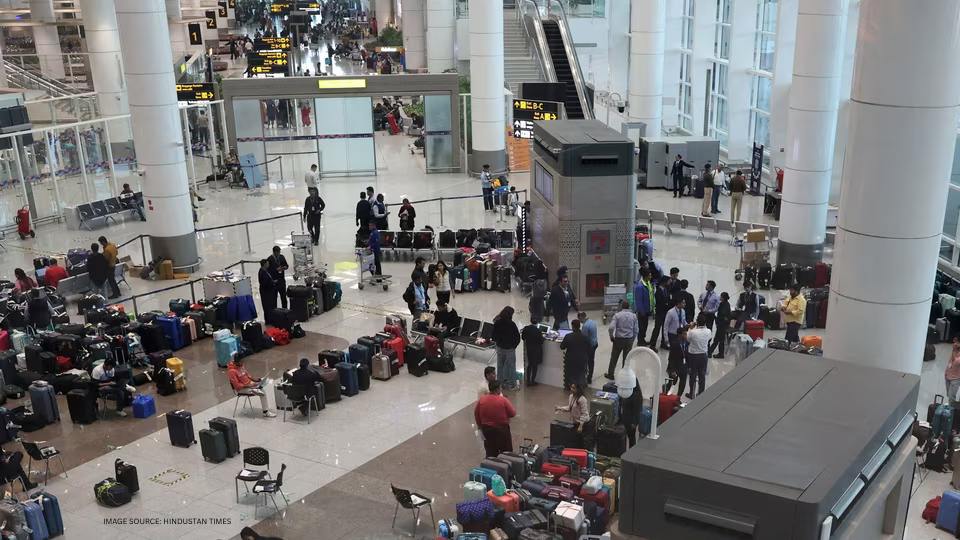
Mumbai Travel Chaos as 116 Flights Cancelled

One of India’s busiest aviation hubs faced major disruption, affecting thousands of passengers traveling between India, the UAE, Qatar, Saudi Arabia, and Europe.
Airport authorities confirmed that the airspace restrictions disrupted both departures and arrivals, particularly flights operated by Middle Eastern carriers. Airline staff managed long queues at counters as stranded passengers actively sought clarity on rescheduling options, refunds, and alternative routes. Officials explained that authorities imposed restrictions over Gulf airspace — a critical corridor that airlines use to connect India with Europe and North America — which directly led to the cancellations.
Why Did Authorities Cancel the Flights?
Military tensions in the region prompted authorities to enforce an emergency closure of key sections of Gulf airspace. Airlines operating from Mumbai to destinations such as Dubai, Doha, Riyadh, and other international hubs depend heavily on these routes to reduce flight time and save fuel.
Once authorities enforced the closure, airlines either rerouted aircraft through longer alternative corridors or cancelled services altogether. In many cases, airlines chose cancellations to avoid operational uncertainty and escalating costs.
Aviation experts explained that when airlines reroute flights through alternative air corridors, they increase fuel consumption, extend travel time, and sometimes require technical stops. Faced with rapidly changing geopolitical conditions, several carriers decided to suspend operations temporarily rather than risk further complications.
Major Airlines Report Significant Disruptions
Major international carriers including Emirates, Qatar Airways, Etihad Airways, and Air India cancelled multiple flights due to the Gulf airspace restrictions. Several low-cost carriers with strong Gulf connectivity also suspended or rescheduled operations.
Airlines urged passengers traveling to the United Arab Emirates and other Gulf Cooperation Council (GCC) nations to check flight status before leaving for the airport. Carriers issued travel advisories across social media platforms and directed passengers to monitor official websites and customer care helplines for real-time updates.
Passengers Face Stress and Uncertainty at Mumbai Airport
The cancellations created tense scenes at Chhatrapati Shivaji Maharaj International Airport. Families traveling for business meetings, vacations, and urgent medical treatments suddenly found themselves stranded. Many passengers voiced frustration over limited communication and unclear timelines for rebooking.
Airport authorities deployed additional ground staff to manage crowd flow and assist affected travelers. Officials also established temporary help desks to provide real-time updates and guide passengers through rebooking procedures. Despite these efforts, social media platforms saw a surge in posts under hashtags like #MumbaiAirport, #FlightCancelled, and #GulfAirspace, reflecting widespread concern.
One passenger scheduled to travel to London via Dubai said airline staff informed him about the cancellation just three hours before departure. He described the situation as extremely stressful and said he continues to wait for clarity on the next available flight.
Aviation Sector Feels the Pressure
Airlines use the Gulf region as a major transit hub for Indian passengers flying to Europe, the United States, and Africa. Airports in Dubai and Doha serve as critical stopover points in international travel networks. When authorities closed Gulf airspace, airlines operating from Mumbai immediately felt the impact.
Industry analysts warned that prolonged airspace restrictions could drive up airfare prices, trigger further flight delays, and complicate cargo logistics. Mumbai airport handles a significant share of India’s international passenger traffic, and disruptions at this scale affect the broader aviation ecosystem.
Cargo operators also reported delays. Airlines transporting pharmaceuticals, electronics, and perishable goods faced operational challenges. Freight forwarders began closely monitoring developments, as prolonged disruptions could affect trade flows between India and Middle Eastern markets.
Government and Aviation Regulator Step In
India’s aviation regulator began closely monitoring the evolving situation and coordinating directly with airlines. Authorities emphasized that they prioritize passenger safety above all else. Regulators instructed airlines to offer full refunds or suitable alternative arrangements in line with aviation rules.
The Ministry of Civil Aviation initiated discussions with international aviation authorities to assess the likely duration of the Gulf airspace closure and explore contingency strategies.
Advisory for International Travelers
Authorities advised passengers planning international travel in the coming days to:
- Check official airline websites regularly for flight updates
- Confirm flight status before heading to the airport
- Monitor government travel advisories
- Maintain flexibility in travel plans if routing through the Gulf region
Travel insurance providers reported a noticeable spike in customer inquiries related to flight cancellation coverage and trip interruption policies.
Uncertainty Continues
Aviation authorities continue to hope for a swift diplomatic resolution, but geopolitical tensions keep the situation fluid. Any escalation could force authorities to extend airspace restrictions and deepen global travel disruptions.
For now, Mumbai airport continues to operate domestic flights normally, while international schedules remain vulnerable to sudden changes. Airlines, regulators, and passengers now wait for stability to return as global aviation navigates yet another geopolitical crisis.

Post Comment