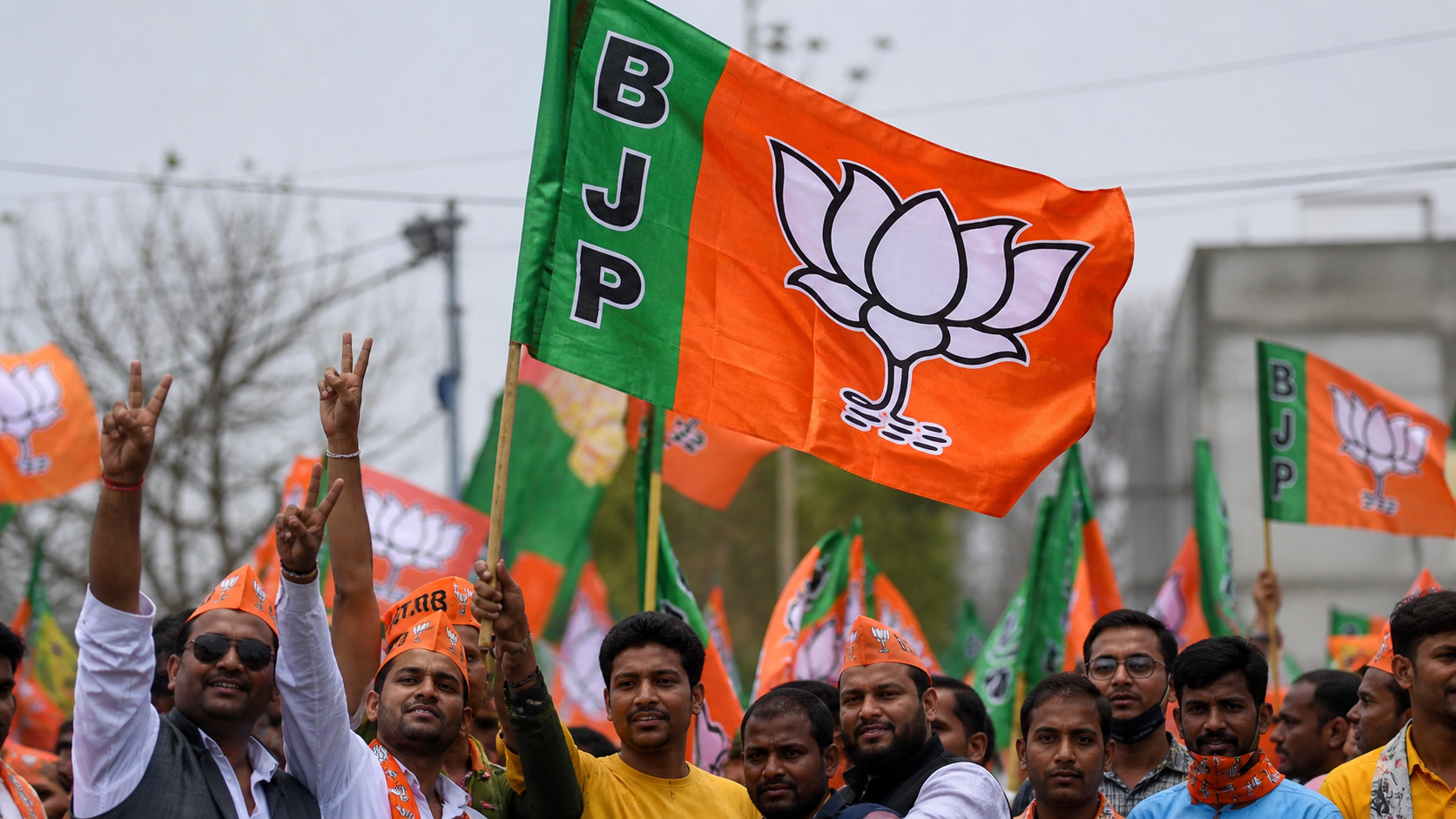
BJP Storms Assam Again
In a massive political victory that has once again reshaped the narrative of Northeast politics, the Bharatiya Janata Party (BJP) has emerged victorious in Assam, strengthening its hold over one of India’s most strategically important states.
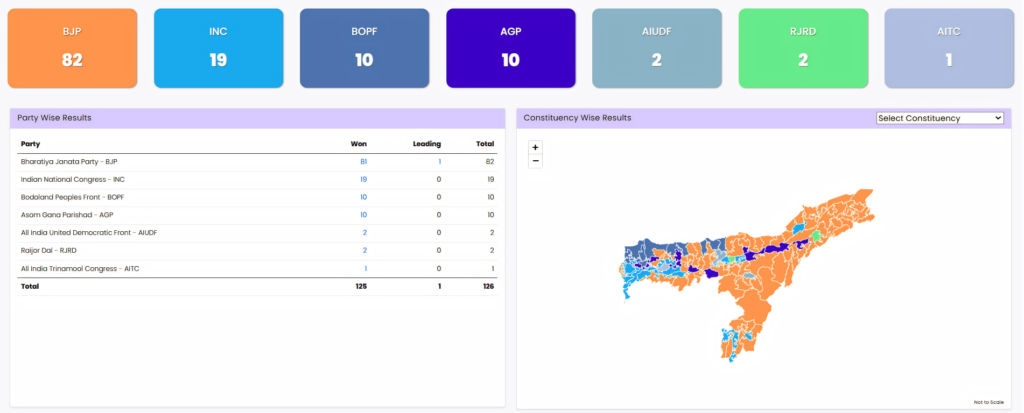
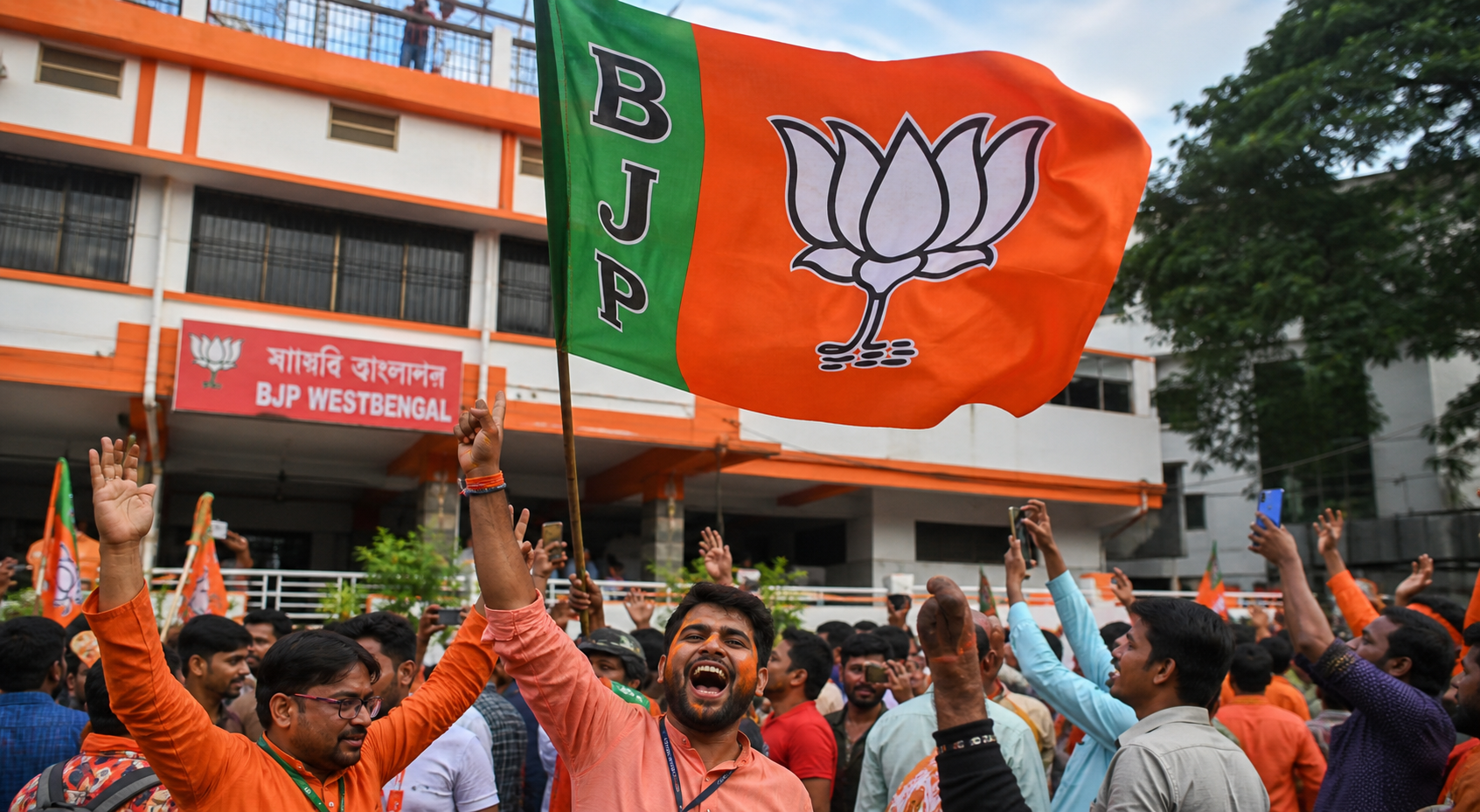
The latest Assam election results have triggered celebrations among BJP supporters across the country, with party workers gathering in large numbers, waving saffron flags, distributing sweets, and chanting slogans in support of the leadership. The win is not just about numbers—it is being seen as a clear signal of voter confidence in the BJP’s governance model.
For many political observers, this result did not come as a complete surprise. Over the last few years, Assam has become a major example of BJP’s aggressive expansion in the Northeast. From infrastructure growth to welfare schemes, the party has consistently pushed a development-first narrative that appears to have resonated strongly with voters.
Chief Minister Himanta Biswa Sarma has once again emerged as one of the BJP’s most influential faces in regional politics. Known for his sharp communication style and active governance image, Sarma has played a crucial role in strengthening the party’s grassroots network.
Many voters, especially young people and first-time voters, seem to have connected with the BJP’s focus on roads, employment initiatives, education reforms, digital services, and law-and-order messaging.
Why Did BJP Win Big in Assam?
Several factors appear to have contributed to BJP’s strong performance:
1. Strong Leadership Image
The party benefited from both national and regional leadership. Prime Minister Narendra Modi’s continued popularity, combined with Himanta Biswa Sarma’s local connect, created a powerful campaign combination.
2. Development Narrative
Infrastructure projects, improved connectivity, new investments, and welfare schemes have been central to BJP’s messaging. In many districts, voters reportedly prioritized governance over traditional identity politics.
3. Weak Opposition Unity
Opposition parties struggled to create a unified narrative strong enough to challenge BJP’s well-organized campaign machinery. Internal divisions and inconsistent messaging weakened their impact.
4. Youth and Women Voters
BJP appears to have expanded support among women beneficiaries of welfare programs and younger voters seeking economic opportunities.
What This Means for Indian Politics
This Assam victory is larger than a state-level win. Politically, it gives BJP another boost in the Northeast—a region once considered difficult terrain for the party.
The result also sends a broader message ahead of future elections in other states: the BJP remains electorally formidable, especially where governance, welfare delivery, and strong local leadership align.
In my view, Assam has increasingly become a political laboratory for BJP’s larger expansion strategy. The party seems to understand that winning elections today is not just about ideology or emotional slogans. Voters, particularly in aspirational states, are asking practical questions: Who can deliver roads? Jobs? Stability? Faster administration?
That doesn’t mean all challenges are solved. Assam still faces issues around unemployment, flood management, identity debates, and economic diversification. Winning an election is easier than meeting rising public expectations after it.
And that may be the real test ahead.
For BJP, this is a moment of celebration—but also a responsibility. A stronger mandate means voters are not just rewarding past performance; they are investing trust in future delivery.
As fireworks light up the sky and victory chants echo through party offices, one thing is clear: BJP’s Assam win has once again made national headlines and reinforced the state’s growing importance in India’s political map.
The Northeast is no longer on the sidelines. It is now central to the story.

Post Comment