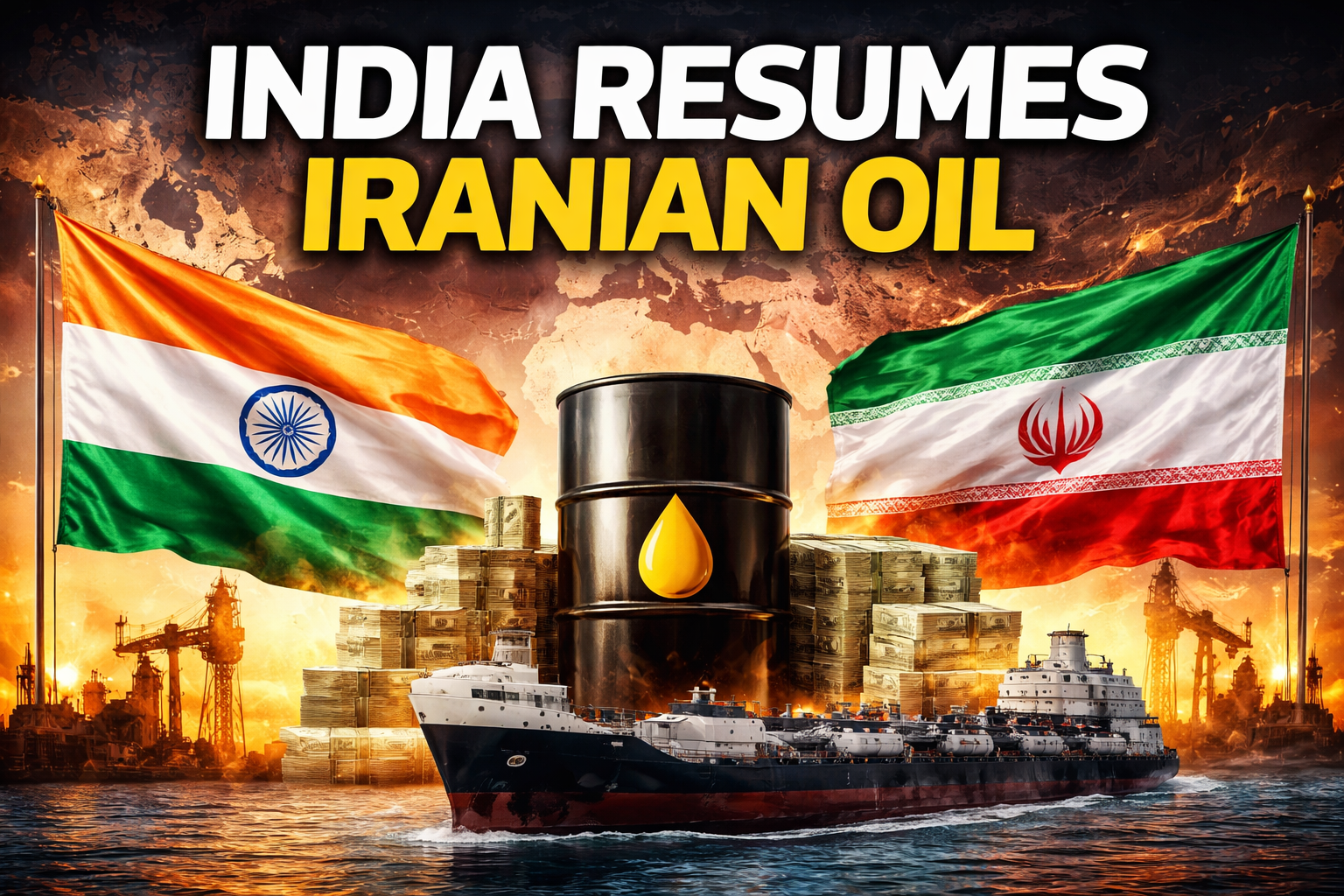
Oil Shockwave: India Reopens Iranian Pipeline After 7-Year Freeze
In a significant geopolitical and economic development, India has reportedly resumed importing crude oil from Iran for the first time in seven years. The move signals a strategic shift in energy sourcing amid global supply uncertainties, fluctuating crude prices, and evolving diplomatic equations.
A Strategic Comeback in Energy Ties
According to recent reports, Indian refiners have begun sourcing limited volumes of Iranian crude, marking a cautious yet impactful return to a once-strong energy partnership. Before 2019, Iran was among India’s top oil suppliers, offering favorable pricing, extended credit periods, and lower freight costs.
However, imports came to a halt following stringent sanctions imposed by the United States on Iran’s oil exports. These sanctions forced India and several other nations to diversify their energy imports, turning to suppliers like Saudi Arabia, Iraq, and Russia.
Why Now? Key Reasons Behind the Move
The timing of this renewed engagement is crucial. Global oil markets have been volatile due to ongoing geopolitical tensions, including the Russia-Ukraine conflict and instability in the Middle East. These factors have disrupted supply chains and driven nations like India to explore cost-effective alternatives.
Iranian crude is particularly attractive due to its competitive pricing and logistical advantages. Reports suggest that India may also benefit from relaxed payment mechanisms, possibly bypassing traditional dollar-based systems—an important factor given currency fluctuations and trade imbalances.
Economic Impact on India
For India, the world’s third-largest oil importer, securing cheaper crude is critical for managing inflation and reducing the current account deficit. Lower import costs can translate into reduced fuel prices domestically, easing the burden on consumers and industries alike.
Experts believe that this move could strengthen India’s energy security strategy by diversifying supply sources and reducing over-dependence on any single region.
Diplomatic Balancing Act
Resuming oil imports from Iran is not without its challenges. India must carefully navigate its diplomatic ties with the United States, which continues to maintain a complex stance on Iran. While there have been discussions around easing sanctions, no official large-scale relaxation has been announced.
India’s foreign policy has traditionally emphasized strategic autonomy, and this move could be seen as an extension of that approach—balancing relationships with both Western allies and Middle Eastern partners.
What Lies Ahead?
While current imports are reportedly limited, this development could pave the way for a broader revival of India-Iran trade relations. Key projects like the Chabahar Port, which India is helping develop in Iran, may also gain renewed momentum.
Market analysts are closely watching how this decision impacts global oil prices and whether other countries will follow suit in re-engaging with Iran.
Conclusion
India’s return to Iranian oil after seven years is more than just an energy deal—it’s a calculated geopolitical move. As global energy dynamics continue to shift, this development underscores India’s intent to secure its economic interests while maintaining a delicate diplomatic balance.
Keywords: India Iranian oil, crude oil imports, global oil market, Iran sanctions, energy security India, oil price impact, geopolitical news, India energy strategy, Russia Ukraine war oil impact, Middle East oil supply.

Post Comment