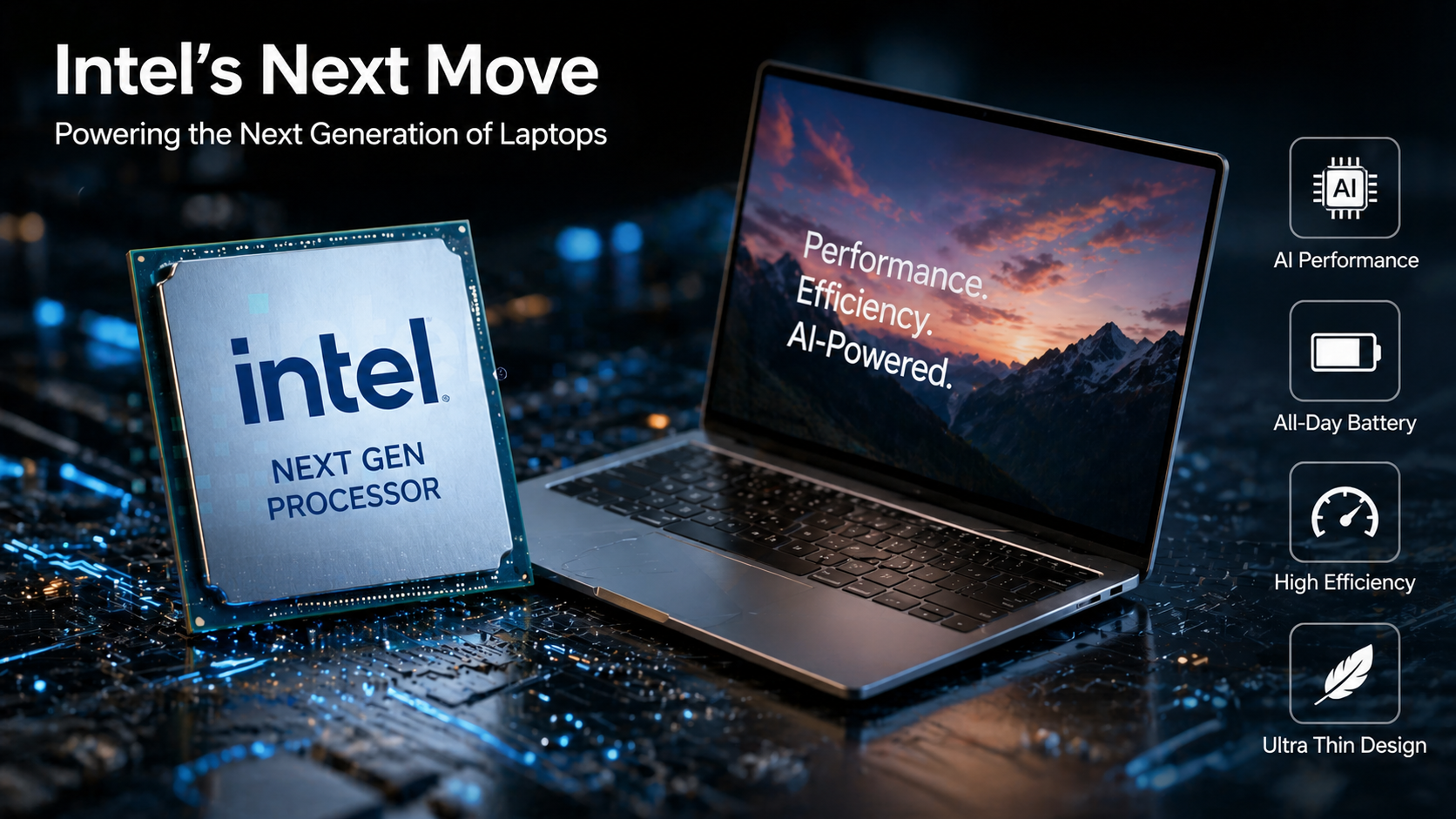
Intel’s MacBook Killer? Big Laptop Shake-Up Ahead
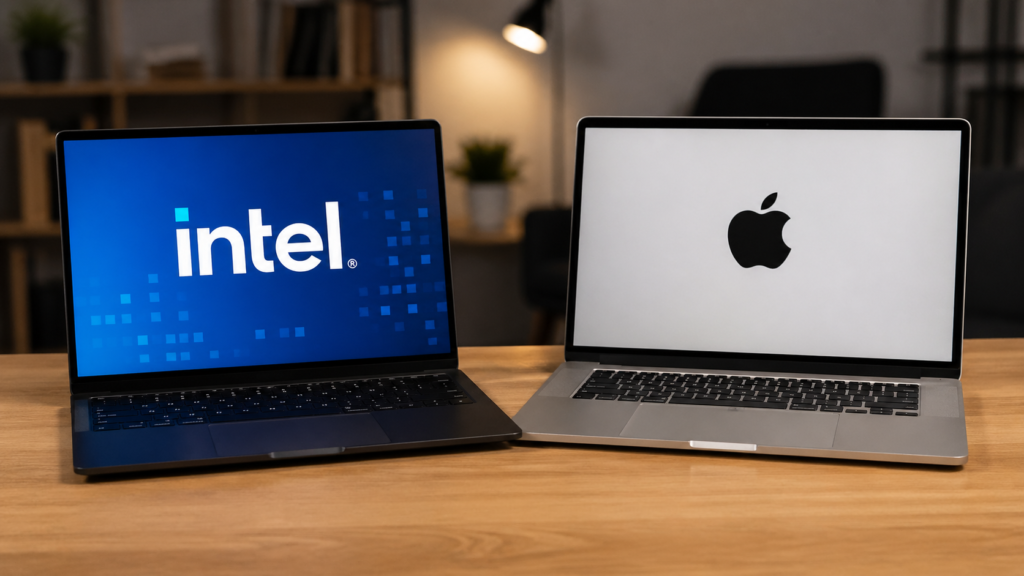
For years, the premium laptop market has felt like a one-horse race. Ever since Apple Inc. launched its custom silicon chips and transformed the MacBook lineup into battery-efficient performance machines, Windows laptop makers have been left chasing shadows. But that narrative may finally be changing.
Now, Intel appears ready to make a serious comeback with an aggressive strategy that could directly challenge Apple’s growing dominance in the thin-and-light laptop segment. Industry insiders believe Intel is preparing its most important laptop push in years—one aimed squarely at users who love MacBook-style performance but prefer the Windows ecosystem.
Why Intel Is Suddenly Back in the Spotlight
Intel has spent the last few years under pressure. The company lost momentum as Apple’s M-series chips gained global praise for delivering incredible speed, fanless designs, and all-day battery life.
From students to content creators, many users shifted toward MacBooks because they offered something rare: high performance without sacrificing portability or battery backup.
But Intel seems to have learned from that disruption.
Reports suggest the chip giant is heavily focusing on its next-generation processors built for AI laptops, ultra-thin notebooks, longer battery life, and improved integrated graphics—four categories currently driving laptop buying decisions worldwide.
This isn’t just another routine processor launch.
This feels like Intel acknowledging a hard truth: the laptop industry has changed, and simply making faster chips is no longer enough.
Consumers today care about:
- battery life
- AI features
- lightweight design
- silent thermals
- premium build quality
- creator performance
And honestly, Apple understood this earlier than almost everyone else.
Intel’s New Plan: Build the “MacBook Alternative” Windows Users Actually Want
Instead of competing only on raw benchmark numbers, Intel is reportedly pushing partners like Dell, HP Inc., Lenovo, and ASUS to create laptops that feel more premium, efficient, and optimized.
That means:
- thinner designs
- OLED displays
- AI-ready processors
- faster wake times
- longer battery optimization
- lower heat output
In simple terms: Intel wants Windows laptops to stop feeling like compromises.
For a long time, buying a Windows laptop meant choosing between power and battery life. Gaming laptops were bulky monsters, while slim laptops often struggled under pressure.
Apple exploited this gap brilliantly.
Now Intel is trying to close it.
And if the company gets execution right, this could trigger a major shift in the global laptop market 2026.
The AI Laptop Race Changes Everything
There’s another reason Intel’s move matters now: artificial intelligence.
AI has quickly become the hottest keyword in consumer tech, and laptop brands are racing to market devices optimized for on-device AI workloads.
From smarter assistants to local image generation and video editing enhancements, AI PCs are expected to dominate tech launches this year.
Intel is positioning itself as a major player in this space with AI-focused chips designed for machine learning tasks, power efficiency, and neural processing.
This is strategically smart.
Apple may dominate premium hardware, but Windows still owns a massive enterprise, gaming, and productivity ecosystem. If Intel can combine AI performance with MacBook-level battery efficiency, millions of users could reconsider their next purchase.
Can Intel Really Beat Apple?
Beating Apple won’t be easy.
Apple controls both hardware and software, giving it an optimization advantage few companies can match. Its ecosystem—from iPhone to iPad and MacBook—creates strong customer loyalty.
But Intel doesn’t necessarily need to “beat” Apple outright.
It only needs to make Windows laptops desirable again in the premium category.
That alone would be a huge win.
Personally, this feels like one of Intel’s most realistic comeback opportunities in years. The company no longer has the luxury of incremental upgrades. It has to deliver something genuinely exciting—and finally, it looks like it understands that.
For consumers, that’s excellent news.
More competition means better laptops, more innovation, and possibly lower prices across the premium segment.
After years of Apple comfortably leading the conversation, 2026 might finally bring a real challenger.
And if Intel gets this right, the next laptop war could be far more interesting than anyone expected.




Post Comment